


Cervical osteochondrosis is a common disease that causes many unpleasant symptoms and significantly worsens the quality of life.It is almost impossible to cure without surgery.But you can stop the development of the process and get rid of a significant part of the symptoms.Only physical therapy can help with this.
Prescription of therapeutic exercises for osteochondrosis
Osteochondrosis is the degeneration of bone tissue and cartilage (intervertebral discs) of the spine.As a result, its discs are deformed, protrude between the vertebrae and growths are formed in the body of the vertebrae.
As a result, nerve endings are pinched, blood vessels running along the spine are pinched, and the surrounding tissues are injured by bone growths.Poor blood supply and immobility due to pain accelerate the development of pathology.As a result, the patient receives a whole "bouquet" of unpleasant symptoms:
- Sharp pain ("lumbago")
- Sight and hearing impairments.
- Dizziness.
- Changes in intracranial pressure.
- Fainting.
- Nausea attacks.
- Limited mobility in the neck area.
Medications can reduce inflammation and pain.But they are not able to release the pinched nerve roots and blood vessels, put the intervertebral discs in the right position and restore mobility.Only special exercises can do this.Therefore, therapeutic exercises are the most important component of osteochondrosis treatment.
Indications for the use of gymnastics
Therapeutic exercises are useful in every stage of osteochondrosis (this disease has four of them).However, it gives visible results only in the early stages.The presence of the disease and its stage is determined by the doctor.The reason for undergoing examination and performing therapeutic exercises should be any of the above symptoms, as well as a crack in the neck during movement.

Previously, cervical osteochondrosis was considered a disease of people of mature age (from 40-45 years old), but in recent years it has become sharply "younger" and is found even in teenagers.The reason is prolonged stationary sitting at the computer or at the table.Therefore, even healthy young people would do well to study a set of exercises indicated for cervical osteochondrosis and perform them for prevention purposes.You don't need any sports equipment or clothing for this;you can do it during your lunch break or instead of a "smoke break".
Contraindications to therapeutic exercises
This does not mean that physical therapy can be done anytime and by anyone.Osteochondrosis can be in acute, subacute and remission stages.The acute phase is characterized by the obvious manifestation of some symptoms of the disease (they appear in different groups in different people) and, necessarily, severe pain during movement.
In the acute stage of osteochondrosis, it is necessary to relieve pain and inflammation with the help of medications (prescribed by a doctor) and physiotherapeutic procedures in the clinic.Performing physical exercises is strictly contraindicated.
Only in the subacute phase can you start doing gymnastics.When moving the neck, there should be no sharp pains, dizziness, "flies" before the eyes or tinnitus.A little discomfort is acceptable.The following contraindications are also:
- Severe blood pressure disorders.
- Malignant tumors.
- Feverish conditions.
Classes during the remission phase are mandatory (at least 3 times a week).If treatment begins at an early stage, there is a possibility that with a conscious attitude to physical therapy, the acute phase of the disease will not return for many years.
Rules for performing therapeutic exercises
Exercises for patients with cervical osteochondrosis are simple.They represent the movements of the head, shoulders and arms.But they must be carried out respecting a set of rules.Only in this case will they give results.
- Before starting the exercise, the muscles should be warmed up.The easiest way to do this is through self-massage.
- Movements should be performed with as much amplitude as possible.It may be small at first, but should increase as you practice.
- Movements should be smooth, without jerking.
- The number of repetitions of each exercise is 5-10 times.If it is symmetrical, the repetitions are counted separately in each direction.
- You can do gymnastics while sitting (with your back necessarily resting on the back of a chair or armchair) or standing.The first is even better, so it is convenient to do office gymnastics at your workplace.
- There should be no breaks in classes.The exception is the transition of osteochondrosis to the acute phase or the appearance of a disease accompanied by high temperature.
- You should tolerate minor discomforts (slight pains, pulling sensations, tingling), especially at the beginning of classes.But if sharp pains or other severe symptoms of osteochondrosis appear, you should immediately stop training and consult a doctor as soon as possible.
Doctors often recommend doing therapeutic exercises always at the same time.Compliance with this rule is desirable but not mandatory.If for some reason you cannot study at one time, you can do it at different times.It is important not to lose hours at all.
If you do not follow the exercise rules listed above, gymnastics will not only not help, but may even give the opposite result.A movement performed incorrectly can lead to a pinched nerve or a displaced intervertebral disc.
The main group of exercises for cervical osteochondrosis
Today there are many systems for treating osteochondrosis using physical therapy.You can make the choice yourself or with the advice of a doctor - all systems give results.There are also some basic exercises included in almost all complexes.
- The slope of the head to the shoulders.
- It turns to the sides (in this case, you need to pull the chin to the shoulder).
- Turn to the sides while simultaneously placing your palm on the opposite shoulder.
- Bends back and forth.It is good if, when you lean back, your head presses against the headrest of a chair or chair, overcoming a slight resistance.
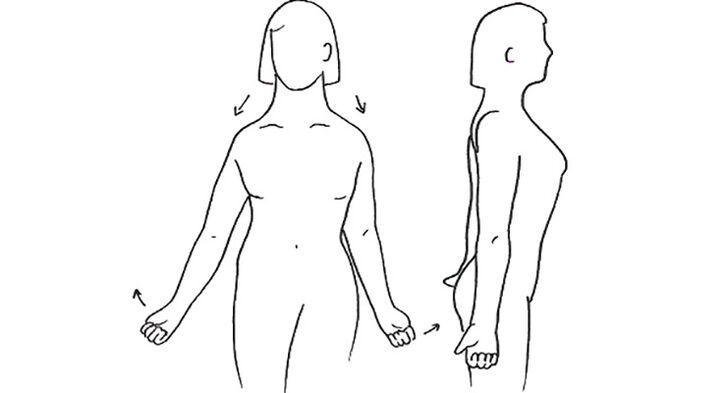
- Raising and lowering the shoulders.
- He tilts his head to his shoulder while raising his other shoulder.
- Stretching the neck forward and moving it back (called "bird looking out of the nest").
- Stretching the neck forward followed by turning the head to the side (called "goose").
- Animes and turns of the head to the side with the arms raised and joined above the head (called "fakir").
- Stretching the neck forward and up while simultaneously moving the arms straight behind the back (called "seagull").
Also, patients with osteochondrosis are recommended to tilt their head to the side and forward, as well as to turn to the sides with a very small amplitude.The number of repetitions in such cases should be greater (at least 10 times).These exercises are sometimes called "ay-ay-ay", "yes-yes" and "no-no".They are especially recommended for those who have the so-called "widow's lump" (also known as "housewife's lump") - swelling in the area of the 7th cervical vertebra.
It is better if the first classes are conducted under the guidance of a specialist in physical therapy.He will teach you how to perform the exercises correctly, and then the patient will be able to do it himself.If it is difficult to go to such a specialist, you can use the video guide.
The completion of such a complex (in accordance with all the rules) will require no more than 20 minutes.So, it is clear that it is better to start exercising quickly than to endure all the problems that await patients with cervical osteochondrosis.
Osteochondrosis of the neck is a disease that the doctor cannot cure.He cannot do without the patient's active participation in the treatment process.But, if you start doing therapeutic exercises in time, you can avoid the unpleasant manifestations of osteochondrosis for a long time.